This blog originally appeared as a June 5, 2012 National Public Radio digital news story by Linton Weeks. My comments are featured in a story about what is unique about the 2012 elections.
Sure, but what about 2012? What exactly will make the 2012 election between President Obama and Mitt Romney truly unique?
For one thing, though the candidates have many similarities, as noted by NPR and The New York Times, there is a clear-cut choice between directions the country might take.
And there are other — what shall we call them? — uniquities.
Carol S. Weissert, director of the LeRoy Collins Institute — a nonpartisan public policy think tank in Tallahassee, Fla. — points out that the presidential election in November will be the first since the 2010 Citizens United Supreme Court opinion that opened the barn door to unregulated spending in all political campaigns — but especially presidential campaigns.
"We're seeing some glimpses of what unregulated spending is doing in the Wisconsin recall," Weissert says, "but we haven't seen anything yet."
And, she says, it'll be the first election during a time when our country's economic well-being is linked in large part with Europe's economy. "If the eurozone collapses — or maybe when," Weissert says, "this will shake the core of our economy and affect the presidential election. And there is little we can do about it but watch."
The 2012 election, says Caroline Tolbert, a political science professor at the University of Iowa, will be sui generis in several ways. Never before has this country seen an African-American incumbent president run for re-election, she says. And never before has there been a major party nominee who was a Mormon.
Tolbert also cites the president's mad skills at digital campaigning and politics. "Obama has 26 million likes on Facebook," she says, "compared to less than 2 million for Romney."
For David Schultz, a public policy professor at Hamline University in St. Paul, Minn., the approaching election "is about an America that is divided by a partisan politics of nostalgia versus a politics of tomorrow."
Schultz, who also teaches election law at the University of Minnesota's law school, says the country is at a critical crossroads. One path will determine how America responds to its global role and ranking in a hyperdynamic world.
"The second path America is crossing is demographics," Schultz says. "We are witnesses to a country where one generation of citizens — the baby boomers — are waning in influence and are being replaced by a new generation sharing a different agenda than those who came of age during the 1960s. This election is about the end of the 1960s as a defining moment in American politics. The other demographic change is racial. We are seeing a growth in the strength of people of color, as their numbers increase and the white majority recedes to a white plurality."
The third path, Schultz says, leads to a war over wealth that this country has not seen in a century.
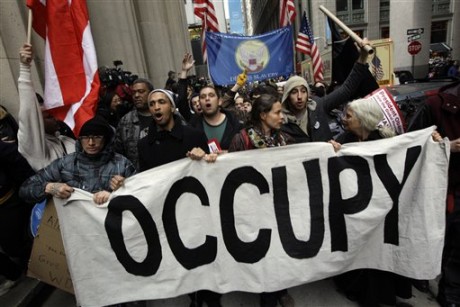
"America is economically more unequal today than it has been since the 1920s," Schultz says, "with multiple statistics and studies demonstrating that the gap between rich and poor has exploded in the last three decades. Occupy Wall Street has highlighted this battle of wealth versus the people, portending a possibility that this election is about whether American democracy is for real or for sale."
Those scenarios — America's place in the world, shifting demographics and the battle between dollars and democracy — are setting up two contrasting political narratives, Schultz says. One narrative leads toward a nostalgic past; the other toward a fast-changing future. "This election," Schultz says, "is about which of the narratives will win."
Vanderbilt's Geer frames it another way. The 2012 election, he says, "strikes me as very much a product of long-standing forces. In this case: the condition of the economy and which candidate we most trust to lead America for the next four years."
Showing posts with label Occupy Wall Street. Show all posts
Wednesday, June 13, 2012
Monday, June 4, 2012
Progressive Politics in the Age of Conservatism
Face it–progressive politics in America looks dead.
No, not socialism, that’s been dead almost from the beginning in the United States. Although during the height of the recent recession a Rasmussen poll found only 53% of the population lacked preferred capitalism to socialism. Yet there generally seems little support for workplace democracy and significant public ownership of state owned enterprises that are profitable and run for the benefit of the public. America’s version of government ownership is to take over ailing and unprofitable enterprises such as the auto industry or banks, pump billions if not trillions of public dollars into them, and then return them to private control just as they become profitable again. This is not socialism–it is corporate welfare.
The progressive politics that looks dead is good old-fashioned economic liberalism. This is not Bill Clinton liberalism that supported NAFTA and welfare reform and which Mitt Romney recently warmly embraced as the kind of Democratic Party politics he liked. Instead, the progressive politics that appears dead is that of Lyndon Johnson, John Kennedy, Franklin Roosevelt, and even Teddy Roosevelt. It is about the Great Society and the New Deal. It is about redistributive politics that sought to raise those at the economic bottom, narrow the gap between the rich and poor, and wrestle control of political power in the United States from corporations and plutocrats. It was a commitment to believing that the government had an important role in make sure we had a nation that was not one-third ill-fed, ill-clothed, and ill-housed, that kids should not go off to school hungry, and that corporations should not have the same rights as people.
But if Bill Clinton’s presidency did not kill off this type of progressive politics, surely Barack Obama has. If Obama did not do it directly, he did so indirectly with the 2010 backlash against him that has done more to kill progressive politics than can be imagined.
Look at where American politics is today. A 2009 Gallup poll pegged 40% of the population as describing themselves as conservative, nearly twice the 21% labeling themselves as liberal. In 2010 the numbers were 42%-20% conservative and liberal, and one can only speculate what they are today after the November, 2010 electoral rout of Obama and the Democrats. Since then Republicans have taken effective control both in Washington, St. Paul, and across the country. Obama is practically immobilized by the TEA Party, Mark Dayton gets nothing his first year in office then supports corporate welfare for the billionaire Vikings owner. Across the country in places such as Wisconsin Governor Walker stomps on union rights and may well be the first governor in history to survive a recall election. Yes unions did win some victories in Indiana and elsewhere, but they are on the defense.
Progressives are on the run everywhere. It is not just on matters of public policy such as with taxes, government regulation, and health care, but also in the rhetorical battle for the hearts and minds of the people. You can’t even call yourself a liberal anymore without being red baited. Thus the reason for switching to the term progressive. Conservatives have successfully labeled as left or socialist anyone who does not agree with them. During the Republican primaries Bachmann called fellow party members “frugal socialists.”
Watch cable news (not just FOX) or surf the web, crack pop conservative ideas dominate. Ron Paul pleads for a return to the gold standard, Michelle Bachmann blames Obamacare and Wall street reforms for the crash in the economy (even though neither have really taken effect for the most part). The recession of 2008 is the fault of the government and not greedy bankers and speculators, Keynesian economics to stimulate the economy is wasteful, consumer protection is bad for business, and the Supreme Court’s Citizens United expanding corporate free speech rights to dump unlimited money into the buying of elections is good. Oh, and vaccines cause mental retardation and global warming does not exist. Main stream media seems afraid to put real progressives on the air and what passes as progressive on MSNBC is watered-down and defensive.
How did it happen? There is no one cause but there are several reasons. First, what Obama and progressives have failed to do is craft a narrative supporting their views. Tea Party activists and conservatives have the narrative of individual freedom–markets are good and government is bad. Government suppresses personal freedom and markets promote it. Never mind that corporations tell more people what to do with more of their life at work than the government ever does or could. That’s corporate freedom. Conservatives have made free choice their buzz word and equality a dirty one. Progressives have no overarching rhetoric and narrative to support their world view. “Hope” and “change” may be great election slogans but they do nothing for governance. The closest one has to a progressive narrative out there is from Occupy Wall Street about the “other 99%.” Yet OWS is so fragmented it lacks a central policy message upon which one could govern. Progressives need a winning narrative that appeals to Americans and which dictates a governing philosophy.
Second, Obama was not really a liberal but his rhetoric looked it. He ran promising change. The reason why so many are disappointed in him is not that he was too far left but that instead he failed to deliver on his lofty promises. At inauguration Obama had a window to change America but he flinched. Carpe diem was not his motto.
Third, progressives lack guts to fight. Look at Obama last year during the debt deal stand off or Dayton and the government shutdown. Both finally caved in. Why? Democrats (and one should not confuse the party with progressivism) believe that they are the caretakers for government. They believe that they need to be responsible and not run the risk of shutting the government down for fear of how it would ruin the economy or hurt people. But conservatives know this and take advantage of the Democrats willingness to blink. But by blinking the Democrats are screwing over poor people and the economy slowly by giving ground one inch at a time and they seem unable to recapture it. Until Democrats fight and show conservatives they are willing to shut the government down and hold conservatives responsible they will never win. Missing is the courage of their convictions.
Fourth, conservatives understand how to make structural reforms and policy changes that both benefit their supporters and enhance their power. Tax cuts and cuts in regulation are simple ways to benefit supporters, but there is more. Voter ID disempowers their opposition, attacking union rights undercuts labor support for Democrats and opposition to business in the workplace, and gutting regulations on money in politics strengthens corporations and rich individuals. Obama’s biggest mistake in his first two years was his failure to act accordingly. Instead of health care reform he should have used his sizable majorities in Congress to support the Employee Free Choice Act to strengthen unions, adopt national legislation banning voter ID and permitting day of election registration in federal elections, and adopting real Wall Street and bank reforms that would have limited their power, including reauthorizing Glass-Steagall.
Moreover, Obama should have first done something to help homeowners and workers get their houses and jobs back. Reward supporters up front and they are with you for life. Furthermore, when the Supreme Court issued Citizens United Obama could have issued an executive order barring corporations from bidding on federal contracts if they make political expenditures. Or he could have ordered the Securities and Exchange Commission to issue rules requiring shareholder assent before companies make political expenditures. Finally, to break the back of conservative news he could have embraced a reinstitution of the Fairness Doctrine to require the media to offer diverse view points. But he did not do any of this? Why?
This is the last problem. Democrats now feed at the same trough as Republicans. Obama took more money in 2008 from Wall Street than any other presidential candidate in history. Democrats are increasingly as dependent on big corporate and individual donors as Republicans and just as bought and paid for.
Progressive politics is dead so long as it is married to the current Democrat Party. Progressives need their own Tea Party revolution on the left–one that engineers a new rhetoric and takeover of the party. One that is not willing to play it safe and worry that if a few Democrats lose that means the Republicans win. It means a willingness to fight for what you believe in. This is what progressive politics needs to be in the age of conservatism. Dead men don’t fight or win.
No, not socialism, that’s been dead almost from the beginning in the United States. Although during the height of the recent recession a Rasmussen poll found only 53% of the population lacked preferred capitalism to socialism. Yet there generally seems little support for workplace democracy and significant public ownership of state owned enterprises that are profitable and run for the benefit of the public. America’s version of government ownership is to take over ailing and unprofitable enterprises such as the auto industry or banks, pump billions if not trillions of public dollars into them, and then return them to private control just as they become profitable again. This is not socialism–it is corporate welfare.
The progressive politics that looks dead is good old-fashioned economic liberalism. This is not Bill Clinton liberalism that supported NAFTA and welfare reform and which Mitt Romney recently warmly embraced as the kind of Democratic Party politics he liked. Instead, the progressive politics that appears dead is that of Lyndon Johnson, John Kennedy, Franklin Roosevelt, and even Teddy Roosevelt. It is about the Great Society and the New Deal. It is about redistributive politics that sought to raise those at the economic bottom, narrow the gap between the rich and poor, and wrestle control of political power in the United States from corporations and plutocrats. It was a commitment to believing that the government had an important role in make sure we had a nation that was not one-third ill-fed, ill-clothed, and ill-housed, that kids should not go off to school hungry, and that corporations should not have the same rights as people.
But if Bill Clinton’s presidency did not kill off this type of progressive politics, surely Barack Obama has. If Obama did not do it directly, he did so indirectly with the 2010 backlash against him that has done more to kill progressive politics than can be imagined.
Look at where American politics is today. A 2009 Gallup poll pegged 40% of the population as describing themselves as conservative, nearly twice the 21% labeling themselves as liberal. In 2010 the numbers were 42%-20% conservative and liberal, and one can only speculate what they are today after the November, 2010 electoral rout of Obama and the Democrats. Since then Republicans have taken effective control both in Washington, St. Paul, and across the country. Obama is practically immobilized by the TEA Party, Mark Dayton gets nothing his first year in office then supports corporate welfare for the billionaire Vikings owner. Across the country in places such as Wisconsin Governor Walker stomps on union rights and may well be the first governor in history to survive a recall election. Yes unions did win some victories in Indiana and elsewhere, but they are on the defense.
Progressives are on the run everywhere. It is not just on matters of public policy such as with taxes, government regulation, and health care, but also in the rhetorical battle for the hearts and minds of the people. You can’t even call yourself a liberal anymore without being red baited. Thus the reason for switching to the term progressive. Conservatives have successfully labeled as left or socialist anyone who does not agree with them. During the Republican primaries Bachmann called fellow party members “frugal socialists.”
Watch cable news (not just FOX) or surf the web, crack pop conservative ideas dominate. Ron Paul pleads for a return to the gold standard, Michelle Bachmann blames Obamacare and Wall street reforms for the crash in the economy (even though neither have really taken effect for the most part). The recession of 2008 is the fault of the government and not greedy bankers and speculators, Keynesian economics to stimulate the economy is wasteful, consumer protection is bad for business, and the Supreme Court’s Citizens United expanding corporate free speech rights to dump unlimited money into the buying of elections is good. Oh, and vaccines cause mental retardation and global warming does not exist. Main stream media seems afraid to put real progressives on the air and what passes as progressive on MSNBC is watered-down and defensive.
How did it happen? There is no one cause but there are several reasons. First, what Obama and progressives have failed to do is craft a narrative supporting their views. Tea Party activists and conservatives have the narrative of individual freedom–markets are good and government is bad. Government suppresses personal freedom and markets promote it. Never mind that corporations tell more people what to do with more of their life at work than the government ever does or could. That’s corporate freedom. Conservatives have made free choice their buzz word and equality a dirty one. Progressives have no overarching rhetoric and narrative to support their world view. “Hope” and “change” may be great election slogans but they do nothing for governance. The closest one has to a progressive narrative out there is from Occupy Wall Street about the “other 99%.” Yet OWS is so fragmented it lacks a central policy message upon which one could govern. Progressives need a winning narrative that appeals to Americans and which dictates a governing philosophy.
Second, Obama was not really a liberal but his rhetoric looked it. He ran promising change. The reason why so many are disappointed in him is not that he was too far left but that instead he failed to deliver on his lofty promises. At inauguration Obama had a window to change America but he flinched. Carpe diem was not his motto.
Third, progressives lack guts to fight. Look at Obama last year during the debt deal stand off or Dayton and the government shutdown. Both finally caved in. Why? Democrats (and one should not confuse the party with progressivism) believe that they are the caretakers for government. They believe that they need to be responsible and not run the risk of shutting the government down for fear of how it would ruin the economy or hurt people. But conservatives know this and take advantage of the Democrats willingness to blink. But by blinking the Democrats are screwing over poor people and the economy slowly by giving ground one inch at a time and they seem unable to recapture it. Until Democrats fight and show conservatives they are willing to shut the government down and hold conservatives responsible they will never win. Missing is the courage of their convictions.
Fourth, conservatives understand how to make structural reforms and policy changes that both benefit their supporters and enhance their power. Tax cuts and cuts in regulation are simple ways to benefit supporters, but there is more. Voter ID disempowers their opposition, attacking union rights undercuts labor support for Democrats and opposition to business in the workplace, and gutting regulations on money in politics strengthens corporations and rich individuals. Obama’s biggest mistake in his first two years was his failure to act accordingly. Instead of health care reform he should have used his sizable majorities in Congress to support the Employee Free Choice Act to strengthen unions, adopt national legislation banning voter ID and permitting day of election registration in federal elections, and adopting real Wall Street and bank reforms that would have limited their power, including reauthorizing Glass-Steagall.
Moreover, Obama should have first done something to help homeowners and workers get their houses and jobs back. Reward supporters up front and they are with you for life. Furthermore, when the Supreme Court issued Citizens United Obama could have issued an executive order barring corporations from bidding on federal contracts if they make political expenditures. Or he could have ordered the Securities and Exchange Commission to issue rules requiring shareholder assent before companies make political expenditures. Finally, to break the back of conservative news he could have embraced a reinstitution of the Fairness Doctrine to require the media to offer diverse view points. But he did not do any of this? Why?
This is the last problem. Democrats now feed at the same trough as Republicans. Obama took more money in 2008 from Wall Street than any other presidential candidate in history. Democrats are increasingly as dependent on big corporate and individual donors as Republicans and just as bought and paid for.
Progressive politics is dead so long as it is married to the current Democrat Party. Progressives need their own Tea Party revolution on the left–one that engineers a new rhetoric and takeover of the party. One that is not willing to play it safe and worry that if a few Democrats lose that means the Republicans win. It means a willingness to fight for what you believe in. This is what progressive politics needs to be in the age of conservatism. Dead men don’t fight or win.
Saturday, January 21, 2012
Understanding Occupy Wall Street
A packed house at Hennepin United Methodist Church on Thursday night as I spoke to Citizens for Global Solutions. The title of my talk: "Occupy Wall Street and the Twilight of American Capitalism." Thanks to all who came; it was a warm reception on a chilly night.
Thursday, November 17, 2011
Occupy Wall Street highlights documented structural and political inequalities
This blog post originally appeared on Minnpost on November 17, 2011.
Occupy Wall Street (OWS) is a cacophony of voices speaking a simple message about the structural economic and political inequalities in America and around the world. Sharing affinities to the 1999 World Trade Organization protests against globalization, OWS looks to the growing power of global financial institutions and their stranglehold on governments around the world.
OWS points to how the Bush and the Obama administrations loaned or credited trillions to banks and the too-big-to-fails to bail them out after they gambled on Wall Street, only to see homeowners face record losses in their houses and illegal foreclosures by these institutions. Tax breaks and loans were provided to the big auto companies but little was done to help the unemployed. The banks of Europe were recapitalized by the International Monetary Fund and the European Central Bank, but Greece and Italy was compelled to take the so-called "haircuts." Democracy has taken a backseat to saving capitalism. This is the message of OWS.
While Rome and the rest of the world burn, Nero fiddles. At least in this case, the fiddling is done by the Republican presidential candidates, who assert that all that ails the economy can be cured by more tax cuts and free markets. But while the GOP fiddles, a host of interesting studies have come out documenting and criticizing the ideology of Herman Cain, Michele Bachmann and company, as well as offering some insights into the state of the American economy. These reports are worth noting since they have received scant notice in the mainstream media.
The rich are getting richer, the poor poorer, no matter how you examine it.
In October a Congressional Budget Office report documented the growth in income in the United States from 1979 to 2007. For those in the top 1 percent bracket, their income increased by 275 percent. For those in the top 20 percent, it increased by 65 percent, for the middle incomes it was a 40 percent increase, and for those in the bottom 20 percent it was scant 18 percent. In 2010, the census reported the richest 5 percent of the population accounted for 21 percent of the income, with the top 20 percent receiving over 50 percent of the total income in the country.
Moreover, the latest census figures point to a poverty rate in 2010 of 15.1 percent, representing a record 46 million people in poverty. But earlier this month the US Census Bureau issued a new report recalculating what constitutes poverty — noting that current estimates are based on an outdated methodology from 1960s. This measure for calculating poverty did not include government transfers (welfare) or tax cuts when making estimates, and it also did not reflect the current spending patterns of Americans. Using new measurement tools, which the Census Bureau calls the "supplemental measure of poverty," the study concluded that the poverty rate is actually 16 percent — higher than the old estimate — constituting more than 49 million individuals in poverty. So much for welfare queens getting rich on the system.
The rich and poor live in separate worlds.
There is a geographic basis to poverty. Generally the assumption is that poverty is concentrated to the urban cores of major cities. One way to measure the spatial dimension to poverty is to use census data. Census tracts where 25 percent or more of the households live in poverty are referred to as high-poverty neighborhoods, and those with 40 percent or more of the households in poverty are referred to as extreme-poverty neighborhoods. Concentrated poverty is a problem because of the issues surrounding low economic opportunity, high government social service costs, and crime.
Looking at concentrated poverty across the United States, the Brookings Institution recently concluded that 10.5 percent of all individuals lived in extreme-poverty neighborhoods, up from 9.1 percent in 2000. Estimates are that more than 15 percent overall live in concentrated-poverty neighborhoods, with the most rapid growth occurring in the suburbs. The Twin Cities metro region is not immune, with 9.4 percent of the population living in concentrated poverty neighborhoods that include some suburbs but mostly the Minneapolis-St Paul urban cores. These trends parallel 2000 census data demonstrating the gravitation of poverty from the cities to the inner ring suburbs, creating really a two-tiered metro region marked by affluence and poverty.
Similarly, in the just released Stanford University/Russell Sage Foundation’s “Growth in the Residential Segregation of Families by Income, 1970-2009,” researchers found that America was becoming increasingly segregated by income. In 1970 only 15 percent of families were living in affluent or poor neighborhoods, but in 2007 it was 31 percent. They researchers also found that high-income households were less likely to be found in mixed-income neighborhoods than the rest of the population. In general the percentage of Americans dwelling in middle-income neighborhoods was dwindling and, in fact, these types of residential neighborhoods were shrinking.
Overall the study noted the increased economic and racial segregation in this country, with individuals of different classes less and less likely to come into contact with those from other social-economic backgrounds. America has become a tale of two cities.
Taxes really are not job killers.
The canned line from the Republican candidates has been this: high taxes are killing the economy and forcing companies out of business. Three reports again reject this contention.
The Bureau of Labor Statistics compiles data on reasons for mass layoffs. In its most recently survey, which covers 2010 and 2011, factors such as cancellation of a contract or order for goods, insufficient demand for products and increased automation account for the vast majority of layoffs. High taxes do not even appear on the list as a reason.
Second, the National Federation of Independent Business (NFIB) recently completed a survey asking small businesses to identify the single biggest problem they face. Taxes came in third, with poor sales listed as the biggest issue.
Third, the Citizens for Tax Justice recently released a report, “Corporate Taxpayers & Corporate Tax Dodgers,” documenting the biggest businesses that have failed to pay their fair share of taxes. Among the worst offenders, corporations such as GE, DuPont, Boeing, and Wells Fargo paid no income taxes from 2008-2010, let alone the theoretical 35 percent statutory corporate rate. The Citizens for Tax Justice report documents scores of blue-chip American companies that failed to pay any taxes during these three years, questioning the claim that high taxes are depressing employment and their economic growth.
Moreover, in addressing the arguments made by Herman Cain and others that high corporate tax rates discourage American companies from repatriating $1.2 trillion in money being held overseas, the Corporate Taxpayers study points out that corporate tax rates in other countries are often significantly higher. Additionally, if there is a tax advantage to off-shoring jobs it comes only because American law allows for a permanent deferral on foreign profits. The solution is simple: repeal the deferral and do not allow corporations to use the tax code as an incentive to out-source. Overall, the United States government is facilitating this problem by adopting policies that encourage evasion.
The message from all these studies point to a nation increasingly divided by income, region, and class. They point to a country where the rich pay little taxes or better yet, are able to use the tax code to their advantage — and to a world where in reality, unemployment and slow economic growth are not due to high taxes but to other factors.
Occupy Wall Street is about highlighting these facts, seeking to reintroduce the simple concept that capitalism is meant to facilitate democracy and not vice versa.
Occupy Wall Street (OWS) is a cacophony of voices speaking a simple message about the structural economic and political inequalities in America and around the world. Sharing affinities to the 1999 World Trade Organization protests against globalization, OWS looks to the growing power of global financial institutions and their stranglehold on governments around the world.OWS points to how the Bush and the Obama administrations loaned or credited trillions to banks and the too-big-to-fails to bail them out after they gambled on Wall Street, only to see homeowners face record losses in their houses and illegal foreclosures by these institutions. Tax breaks and loans were provided to the big auto companies but little was done to help the unemployed. The banks of Europe were recapitalized by the International Monetary Fund and the European Central Bank, but Greece and Italy was compelled to take the so-called "haircuts." Democracy has taken a backseat to saving capitalism. This is the message of OWS.
While Rome and the rest of the world burn, Nero fiddles. At least in this case, the fiddling is done by the Republican presidential candidates, who assert that all that ails the economy can be cured by more tax cuts and free markets. But while the GOP fiddles, a host of interesting studies have come out documenting and criticizing the ideology of Herman Cain, Michele Bachmann and company, as well as offering some insights into the state of the American economy. These reports are worth noting since they have received scant notice in the mainstream media.
The rich are getting richer, the poor poorer, no matter how you examine it.
In October a Congressional Budget Office report documented the growth in income in the United States from 1979 to 2007. For those in the top 1 percent bracket, their income increased by 275 percent. For those in the top 20 percent, it increased by 65 percent, for the middle incomes it was a 40 percent increase, and for those in the bottom 20 percent it was scant 18 percent. In 2010, the census reported the richest 5 percent of the population accounted for 21 percent of the income, with the top 20 percent receiving over 50 percent of the total income in the country.
Moreover, the latest census figures point to a poverty rate in 2010 of 15.1 percent, representing a record 46 million people in poverty. But earlier this month the US Census Bureau issued a new report recalculating what constitutes poverty — noting that current estimates are based on an outdated methodology from 1960s. This measure for calculating poverty did not include government transfers (welfare) or tax cuts when making estimates, and it also did not reflect the current spending patterns of Americans. Using new measurement tools, which the Census Bureau calls the "supplemental measure of poverty," the study concluded that the poverty rate is actually 16 percent — higher than the old estimate — constituting more than 49 million individuals in poverty. So much for welfare queens getting rich on the system.
The rich and poor live in separate worlds.
There is a geographic basis to poverty. Generally the assumption is that poverty is concentrated to the urban cores of major cities. One way to measure the spatial dimension to poverty is to use census data. Census tracts where 25 percent or more of the households live in poverty are referred to as high-poverty neighborhoods, and those with 40 percent or more of the households in poverty are referred to as extreme-poverty neighborhoods. Concentrated poverty is a problem because of the issues surrounding low economic opportunity, high government social service costs, and crime.
Looking at concentrated poverty across the United States, the Brookings Institution recently concluded that 10.5 percent of all individuals lived in extreme-poverty neighborhoods, up from 9.1 percent in 2000. Estimates are that more than 15 percent overall live in concentrated-poverty neighborhoods, with the most rapid growth occurring in the suburbs. The Twin Cities metro region is not immune, with 9.4 percent of the population living in concentrated poverty neighborhoods that include some suburbs but mostly the Minneapolis-St Paul urban cores. These trends parallel 2000 census data demonstrating the gravitation of poverty from the cities to the inner ring suburbs, creating really a two-tiered metro region marked by affluence and poverty.
Similarly, in the just released Stanford University/Russell Sage Foundation’s “Growth in the Residential Segregation of Families by Income, 1970-2009,” researchers found that America was becoming increasingly segregated by income. In 1970 only 15 percent of families were living in affluent or poor neighborhoods, but in 2007 it was 31 percent. They researchers also found that high-income households were less likely to be found in mixed-income neighborhoods than the rest of the population. In general the percentage of Americans dwelling in middle-income neighborhoods was dwindling and, in fact, these types of residential neighborhoods were shrinking.
Overall the study noted the increased economic and racial segregation in this country, with individuals of different classes less and less likely to come into contact with those from other social-economic backgrounds. America has become a tale of two cities.
Taxes really are not job killers.
The canned line from the Republican candidates has been this: high taxes are killing the economy and forcing companies out of business. Three reports again reject this contention.
The Bureau of Labor Statistics compiles data on reasons for mass layoffs. In its most recently survey, which covers 2010 and 2011, factors such as cancellation of a contract or order for goods, insufficient demand for products and increased automation account for the vast majority of layoffs. High taxes do not even appear on the list as a reason.
Second, the National Federation of Independent Business (NFIB) recently completed a survey asking small businesses to identify the single biggest problem they face. Taxes came in third, with poor sales listed as the biggest issue.
Third, the Citizens for Tax Justice recently released a report, “Corporate Taxpayers & Corporate Tax Dodgers,” documenting the biggest businesses that have failed to pay their fair share of taxes. Among the worst offenders, corporations such as GE, DuPont, Boeing, and Wells Fargo paid no income taxes from 2008-2010, let alone the theoretical 35 percent statutory corporate rate. The Citizens for Tax Justice report documents scores of blue-chip American companies that failed to pay any taxes during these three years, questioning the claim that high taxes are depressing employment and their economic growth.
Moreover, in addressing the arguments made by Herman Cain and others that high corporate tax rates discourage American companies from repatriating $1.2 trillion in money being held overseas, the Corporate Taxpayers study points out that corporate tax rates in other countries are often significantly higher. Additionally, if there is a tax advantage to off-shoring jobs it comes only because American law allows for a permanent deferral on foreign profits. The solution is simple: repeal the deferral and do not allow corporations to use the tax code as an incentive to out-source. Overall, the United States government is facilitating this problem by adopting policies that encourage evasion.
The message from all these studies point to a nation increasingly divided by income, region, and class. They point to a country where the rich pay little taxes or better yet, are able to use the tax code to their advantage — and to a world where in reality, unemployment and slow economic growth are not due to high taxes but to other factors.
Occupy Wall Street is about highlighting these facts, seeking to reintroduce the simple concept that capitalism is meant to facilitate democracy and not vice versa.
Labels:
corporate taxes,
jobs,
Occupy Wall Street,
poverty,
Republicans,
unemployment
Tuesday, October 18, 2011
Class divides America -- and conflicts reflect a broader battle
A line in the sand of American politics is being drawn. It is a line that cut through Madison, Wis., last spring in the debate over unions. It is a line being cut through Wall Street over the role of banks and hedge-fund managers in destroying the American economy in 2008. And it is a line cutting though Washington, D.C., in Congress over how to produce jobs, regulate banks, reduce the deficit and debt, and provide health care to those who need it. That line is about class in America.
There is a basic belief in America that we are all in it together. We are one big happy middle class where the interests of the rich and poor are not in conflict. Rising tides lift all boats, as Ronald Reagan used to say. There are no class conflicts in this world. That what is good for GM is good for America, and that we live in a society where all of us can be winners with no losers in the economic marketplace. The promise of America is of a non-zero-sum game — some do not have to lose for others to win. The truth is far uglier.
America is a nation characterized by increasing class divides. In 2010 the Census reports the richest 5 percent of the population accounted for 21 percent of the income, with the top 20 percent receiving over 50 percent of the total income in the country. This compares to the bottom quintile accounting for about 3 percent of the total income.
Congressional Budget Office research found that the income gap between the top 1 percent of the population and everyone else more than tripled since 1973. After-tax income for the top 1 percent increased by 281 percent between 1973 and 2007, while for middle class or middle quintile it increased by 25 percent, and for the bottom quintile it was merely 16 percent.
Looking beyond income to wealth, the maldistribution has not been this bad since the 1920s. According to the Institute for Policy Studies, in 2007 the top 1 percent controlled almost 34 percent of the wealth in the country, with half of the population possessing less than 3 percent. The racial disparities for wealth mirror those of income. Studies such as the Survey of Consumer Finances by the Federal Reserve Board have similarly concluded that the wealth gap has increased since the 1980s.
Record numbers in poverty
Social mobility in America has ground to a halt. A 2010 Organization for Economic Cooperation and Development study found that social mobility in the United States ranked far below that of many other developed countries. Other studies, including those in 2005 and 2010 in the Economist, similarly point to declining social mobility in the United States that makes it difficult for individuals to rise from one social economic status to a better one. In fact, there is better than a 95 percent chance that children will not improve their social economic status in comparison to their parents. Finally, the latest Census figures point to a poverty rate in 2010 of 15.1 percent, representing a record 46 million people in poverty. The numbers are equally grim when one looks at women, children, and people of color in poverty — all record or near-record numbers. Few really can move on up to live the American dream.
The reality is that America is a zero sum game. There are winners and losers. What is good for corporate America is not benefitting most Americans, and it is increasingly clear that in simple terms the rich are getting richer, the poor poorer. The reality is, we are not all in it together and class divides America. We see the divide in where individuals live, what they eat, and the entertainment they consume. It is seen in who votes, runs for office, and in political contributions. It is reflected in our tax code, criminal-justice system, and educational opportunities.
Class exists. The problem is, few want to acknowledge it. And when someone talks of economic redistribution, bailing out homeowners and not banks, taxing millionaires, or blaming Wall Street and not the government for the economic problems that ail America, cries of class warfare are raised. Or worse — Herman Cain "McCarthyited" the Wall Street protesters as "Anti-American," invoking the ugliest of all political epithets to assail opponents.
Protests are symptoms
Yes, class conflict exists in America. Protests in Wisconsin over attacks on unions or on Wall Street to challenge the power of banks reflect this. But they are merely symptoms of the broader battle over a simple question: "Why government?" It is a debate over whether free-market fundamentalism prevails as a means to provide order and declare winners and losers in America versus letting the government correct the imperfections and errors that capitalism has produced. It is between saying that the direction of the country is decided by "one dollar one vote" or by "one person one vote." It a battle over whether the government serves the interests of corporations and the rich or the rest of us.
Class exists in America, as it does in all other nations of the world. Like it or not, there are diametrically opposed interests in this country and the real questions are whether the government and politicians should do anything about it and whose interests they should serve.
Subscribe to:
Posts (Atom)